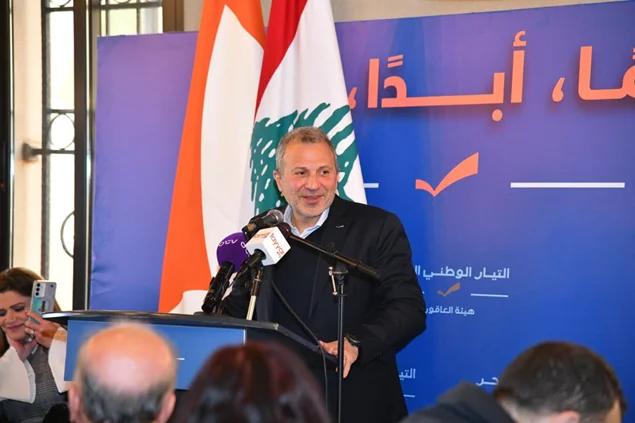
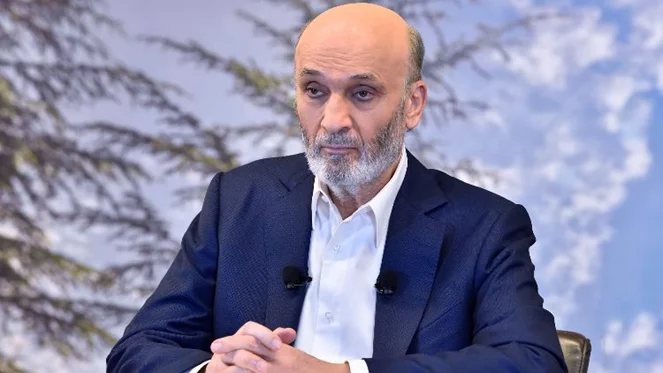
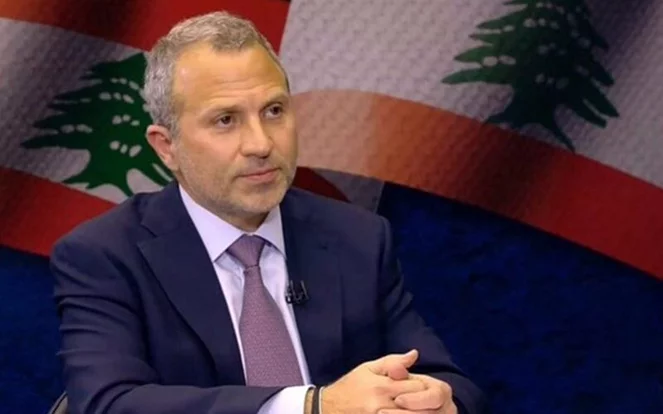
Free Patriotic Movement (FPM) President MP Gebran Bassil stressed that Lebanon’s way out of the crisis lies neither in waiting for externally brokered settlements nor in wars that cannot eliminate an entire segment of Lebanese society. He emphasized the need to uphold the state’s exclusive control over arms without plunging the country into internal conflict, calling for a Lebanese-led initiative based on a new United Nations resolution that would guarantee Israel’s withdrawal, the return of displaced residents, reconstruction, and the state’s exclusive control over arms.
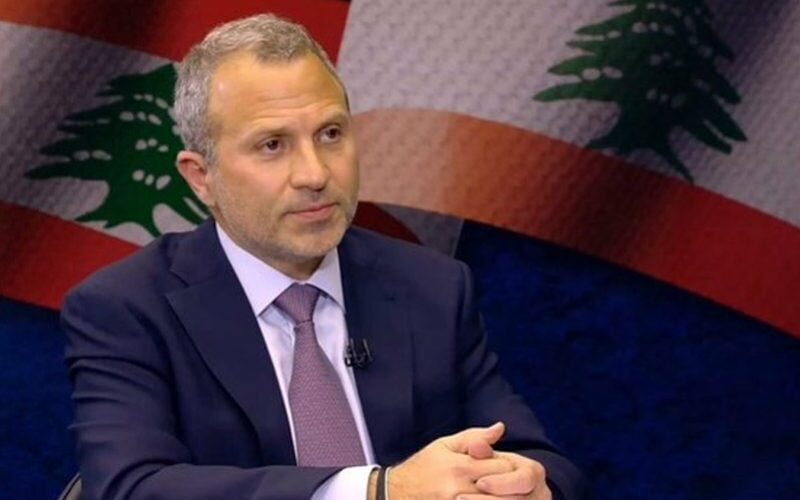
In an interview with Al Jazeera, Bassil addressed developments in Lebanon and the region, the future of Hezbollah’s weapons, relations with Israel and Syria, as well as Lebanon’s political system, economic reforms, and regional role.
Exclusive State Control Over Arms and Avoiding Internal Conflict
Bassil said that the Lebanese state is going through a difficult situation, but that its way out of the crisis does not lie in waiting for settlements or in wars that cannot eliminate an entire segment of Lebanese society.
He noted that the Shiite duo represents a majority within its own community, and that, from the duo’s perspective, the issue of its disarmament has become an existential matter. This requires the state to deal with the issue wisely, without compromising sovereignty or the state’s exclusive control over arms, whether in relation to external or internal parties, while stressing that the most important thing is to avoid an internal conflict.
He explained that, amid what is taking place between the United States and Iran, Lebanon needs a UN-backed framework on which it can rely, through a new UN resolution. He pointed out that the Free Patriotic Movement had submitted a written proposal based on three main pillars: Israel’s withdrawal, the return of displaced people to their villages and reconstruction, and the state’s exclusive control over arms, within a coordinated timeframe that would ensure the achievement of these objectives and with an effective UN presence.
Bassil questioned what alternative could protect Lebanon if Hezbollah’s weapons were relinquished, considering that this alternative should consist of a national defense strategy, an international guarantee against aggression against Lebanon, and UN agreement that Lebanon would not intervene in conflicts outside its territory.
Relations with Israel and Normalization
Regarding Israel, Bassil stressed that it occupies part of Lebanese territory, which requires the issuance of a UN resolution guaranteeing its withdrawal from Lebanon.
He said that the natural course should begin with moving toward a truce, followed by discussions on peace, and only after that could normalization be discussed, stressing that normalization cannot be raised while the Israeli occupation continues.
He said normalization cannot be imposed on peoples, noting that the Lebanese are capable of living alongside all the peoples of the world, given Lebanon’s nature and its religious and cultural diversity.
He stressed that Lebanon cannot stand outside the Arab framework, explaining that any future discussion regarding relations with Israel must come after Lebanon regains its rights to its territory and resources, the Palestinian issue is resolved, and the issue of the displaced Syrians is addressed, and that it must take place within the Arab framework rather than outside it.
National Security Strategy and Hezbollah’s Weapons
In response to a question about how to reach an acceptable settlement regarding Hezbollah’s weapons, Bassil said that the first step lies with the Lebanese government, which must establish a clear national security strategy in order to strengthen Lebanon’s domestic position.
He explained that if the state establishes such a strategy and Hezbollah refuses to hand over its weapons, the party would then be responsible for its position.
He warned that Israel does not fundamentally need pretexts to launch wars, considering that Israeli Prime Minister Benjamin Netanyahu relies on the continuation of wars in order to remain politically viable. Therefore, Israel should not be given any additional pretext to launch a new war against Lebanon.
He noted that when Hezbollah limited its role to defending Lebanon, the country experienced a period of stability between 2006 and 2023.
The Lebanese Army and the Rejection of Internal Division
Regarding the role of the Lebanese Army, Bassil affirmed that the army leadership and its commander are aware of the dangers of being drawn into an internal conflict that could lead to a split within the armed forces.
He said that those who encourage the army to enter into an internal confrontation do not love the army and do not care about preserving its unity. At the same time, he stressed that this does not mean allowing the military institution to be blackmailed or subjected to pressure over this issue.
He explained that the Free Patriotic Movement’s proposal for a new UN resolution draws on previous international experiences and is primarily aimed at containing the issue of weapons, paving the way for addressing a problem that has accumulated since 1990.
He stressed that resolving this longstanding issue cannot be achieved through an external order or a military strike, but rather through an internal process supported from abroad.
He emphasized that responsibility lies with the Lebanese leadership, particularly President Joseph Aoun and Speaker of Parliament Nabih Berri, to take the initiative and propose solutions instead of waiting for a UN resolution to be imposed on Lebanon from abroad.
Rejecting External Subordination and Addressing Israel’s Strategic Calculations
Bassil criticized what he described as a Lebanese state of resignation to external subordination, in contrast to the absence of an initiative based on Lebanese thinking and the national interest.
In his assessment of the developments following October 7, he considered that Israel had affected the Palestinian cause, but had in return suffered significant damage to its image and international reputation as a result of its practices.
He pointed to Arab opposition to normalization with Israel, noting that positions rejecting its policies had also emerged within the United States, among both Republicans and Democrats, as a result of Israel's disregard for various principles and limits.
He criticized some Lebanese who want to get rid of Hezbollah at any cost, considering this approach unrealistic, and said that it is impossible to eliminate a segment of Lebanese society or deal with it through an exclusionary approach.
Political Lebanism and Lebanon’s Regional Role
Bassil affirmed that what can save Lebanon is the concept of the “Political Lebanism”, noting, in response to a question, that Christians made mistakes at previous stages, but that their steadfast idea remained the preservation of Lebanon as a permanent homeland.
He said that Lebanon should be a bridge in the region and that its diversity and richness constitute a source of strength.
He explained that Christians made mistakes when they placed their hopes in external powers, just as anyone who believed they could reduce Lebanon to themselves or monopolize its representation made mistakes.
He called for adopting the concept of “positive engagement” in defining Lebanon’s role, so that it would be a country that takes initiative and plays an active role in the region. He considered that this concept should replace many political expressions and become a principle enshrined in the preamble to the Constitution.
He stressed that Lebanon’s role is based on actively bringing different parties together, rather than becoming an arena for conflicts.
The Taif Agreement and the Civil State
On the constitutional front, Bassil affirmed that the Free Patriotic Movement supports starting from the Constitution as amended following the Taif Agreement, noting that key provisions contained in the agreement, such as decentralization, have yet to be implemented.
He reiterated that the movement supports transitioning to a fully non-sectarian civil political system that ends sectarian privileges and establishes a state based on citizenship and equality.
Relations with Syria and the Issue of Displaced Syrians
Regarding relations with Syria under the leadership of Ahmad al-Sharaa, Bassil affirmed that Lebanon wants good relations with the current Syrian administration, based on regulating relations between the two countries and respecting sovereignty.
He noted that Lebanon has a chronic problem in its relations with Syria, which has been exacerbated by the crisis of the displaced Syrians.
He explained that Lebanon needs Syrian labor, while it is also in Lebanon’s interest to participate in the reconstruction of Syria. He considered that there could be around 400,000 Syrians working in Lebanon, but that it is not normal for there to be two million Syrians on Lebanese territory.
He welcomed statements by Syrian President Ahmad al-Sharaa regarding his lack of desire to interfere in Lebanese affairs, describing them as “excellent,” and warned that any Syrian interference in Lebanon could further complicate relations between the two countries.
He stressed that Lebanon should become a country that the states of the region need in order to help resolve their conflicts, rather than an arena for fueling those conflicts.
The Free Patriotic Movement and Its Relationship with Hezbollah
Speaking about the position and alliances of the Free Patriotic Movement, Bassil affirmed that the movement’s compass and central focus are solely Lebanon’s interests.
He noted that the understanding with Hezbollah led the movement to lose part of its popularity, which at the time stood at 73 percent, but that the movement took this step based on what it considered a national duty.
He affirmed that what strengthened the movement’s standing was its reliance on itself, its popular support, and its distinctly Lebanese political vision.
He stressed that the Free Patriotic Movement is aligned neither with the Iranian axis nor with the Israeli axis, and that its position in favor of handing Hezbollah’s weapons over to the Lebanese Army does not mean aligning with any external axis.
He said he is convinced that solutions cannot be imposed by force from abroad, nor can they be achieved through humiliation, but rather by upholding the concept of the state and the Lebanese people’s ability to take the initiative and make decisions themselves.
He affirmed that building the state cannot be achieved by maintaining weapons outside its control indefinitely, just as it cannot be achieved by eliminating a segment of Lebanese society, calling for lessons to be learned from what has happened in the region and for a common Lebanese position to be formulated and agreed upon by the Lebanese.
Electricity, Gas, and the Economic Crisis
On the economic front, Bassil addressed the electricity and gas crisis, noting that the Qatari project concerning gas and electricity could have been implemented as early as 2010.
He criticized the continued large-scale spending on private generators, noting that the Lebanese are currently paying around $5 billion for generators, and questioning whether this does not constitute a drain on the Lebanese economy.
He affirmed that the Free Patriotic Movement had proposed a comprehensive reform project, but that the nature of Lebanon’s political system prevented its implementation.
He considered that Lebanon’s economic problem is primarily linked to the nature of the political system, whereby citizens obtain services from the state through their sect or political leader, rather than receiving them as rights guaranteed by the state to all citizens.
He stressed that this reality reflects a structural flaw in the Lebanese system and prevents the establishment of a state governed by effective institutions capable of implementing reforms and providing services fairly.
The Presidency and Independent National Decision-Making
Regarding the presidency, Bassil considered that figures like himself do not reach the presidency because they think based on Lebanon’s interests and do not accept having decisions or dictates imposed on them from abroad.
He reiterated that Lebanese solutions must stem from the will of the Lebanese themselves, away from reliance on external powers, and that preserving the state, its sovereignty, and its unity remains the fundamental entry point for addressing political, security, and economic crises.
He stressed that Lebanon cannot rise through wars or by waiting for settlements made by others, but rather through a national initiative that restores its role, strengthens its institutions, and affirms the state’s exclusive control over arms, without undermining civil peace or being drawn into internal conflicts.














 EXCLUSIVE